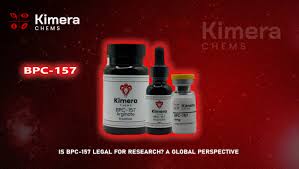
There’s a quiet shift happening in how research-grade peptides are being packaged and sourced. For years, the standard was simple: a lyophilized vial, a Certificate of Analysis, and that was it. Researchers handled all the decisions around delivery, combination protocols, and reconstitution themselves. That’s still an option, and often the right one — but it’s no longer the only one worth considering.
Kimera Chems’ recent product additions reflect something more nuanced than simple catalog growth. The introduction of peptide bundles in multiple delivery formats, including transdermal gel systems, signals a response to how actual research methodology has been changing at the bench level. This isn’t about convenience — it’s about reducing experimental variables and giving labs more control over their study design from the very first step.
The Case for Multi-Peptide Formulations
Single-compound studies have their place, they’re foundational, clean, and essential for establishing baseline mechanisms. But a growing body of pre-clinical work looks at how peptides interact. Do two compounds with overlapping pathways amplify each other’s effects? Do they compete for receptor binding? What happens to angiogenic signaling when BPC-157’s gastroprotective mechanisms run alongside TB-500’s actin-modulating properties?
These questions require study designs that go beyond pulling two separate vials and hoping the concentrations match. They require consistent, co-tested formulations where both compounds come from the same verified batch, at documented ratios, with matching purity documentation. That’s exactly what a combination product addresses.
Kimera Chems has developed their BPC-157 / TB-500 formulation with this in mind. Both peptides have been extensively studied individually — BPC-157 in gastrointestinal and tissue-repair models, TB-500 in cytoskeletal regulation and angiogenic signaling. When studied together, they represent a model for examining how complementary peptide interactions affect wound response and cellular repair cascades. The formulation ships in three formats: lyophilized powder, dry-fill capsules, and transdermal gel, each batch-tested and documented identically.
What Transdermal Delivery Adds to Research Protocols
Transdermal peptide formulations are not new in principle, but reliable, research-grade transdermal sources have historically been harder to find. The addition of a gel-based delivery system to Kimera Chems’ catalog is notable for a few reasons that go beyond surface-level.
First, absorption kinetics differ significantly between delivery formats. A lyophilized peptide reconstituted and applied subcutaneously in an in-vivo model behaves differently than a topical transdermal application. For researchers studying localized tissue signaling, dermal absorption rates, or the permeability characteristics of specific peptide structures, having a verified transdermal source from the same supplier as your injectable compounds removes a major sourcing variable.
Second, formulation consistency matters. Not every peptide gel is made the same way. Carrier composition, concentration per pump delivery, and stability under storage conditions all affect experimental reproducibility. Kimera Chems’ transdermal formulations specify concentration per pump (500mcg per peptide per pump for the BPC-157/TB-500 gel), which gives researchers a quantifiable, repeatable delivery parameter, something that improvised formulations rarely offer.
Newer Compounds Filling Research Gaps
Beyond the combination products, the standalone additions also tell a story about where Kimera Chems is positioning its catalog. Cagrilintide, a long-acting amylin receptor agonist with relevance to metabolic research, is now available from their full research catalog. So is Aminotadalafil, a structural tadalafil analog studied in structure-activity relationship research around PDE5 binding. These aren’t mass-market additions. They’re compounds with specific, defined research applications in metabolic biology, endocrinology, and receptor pharmacology.
The pattern across their new additions points to a supplier that is doing genuine research into where laboratory demand is moving, rather than simply restocking popular items. Cagrilintide gained significant academic attention following clinical trial data from combination metabolic therapies. Aminotadalafil fills a gap in SAR research toolkits. The RVTQ-related peptide N163-166 Mod6 addresses a very specific niche in reproductive signaling biology. These are thoughtful additions.
Quality Standards That Support the Expansion
None of this matters if the products don’t meet research-grade purity standards. The expansion at Kimera Chems is backed by HPLC testing and batch-specific Certificates of Analysis across both legacy and new products. That continuity of documentation across a growing catalog is harder to maintain than it sounds. It requires supplier-side discipline that not every research chemical company applies consistently as they scale.
For labs evaluating whether to add a new supplier or consolidate under a current one, documentation consistency across a wide catalog is often the deciding factor. Kimera Chems’ approach to expanding their lineup while maintaining their testing standards is the kind of supplier behavior that earns long-term procurement relationships rather than one-off orders.
The shift toward bundled formulations and diverse delivery formats isn’t a trend to watch from the sidelines. For pre-clinical researchers, it’s a practical development worth incorporating into how you think about study design and compound procurement — starting now.
Author Bio:
With clear communication and research-driven content, James Hammer supports smarter aging and better daily performance. He also explores the evolving field of cognitive supplements and nootropics for sale that are intended for research and learning about human performance potential.