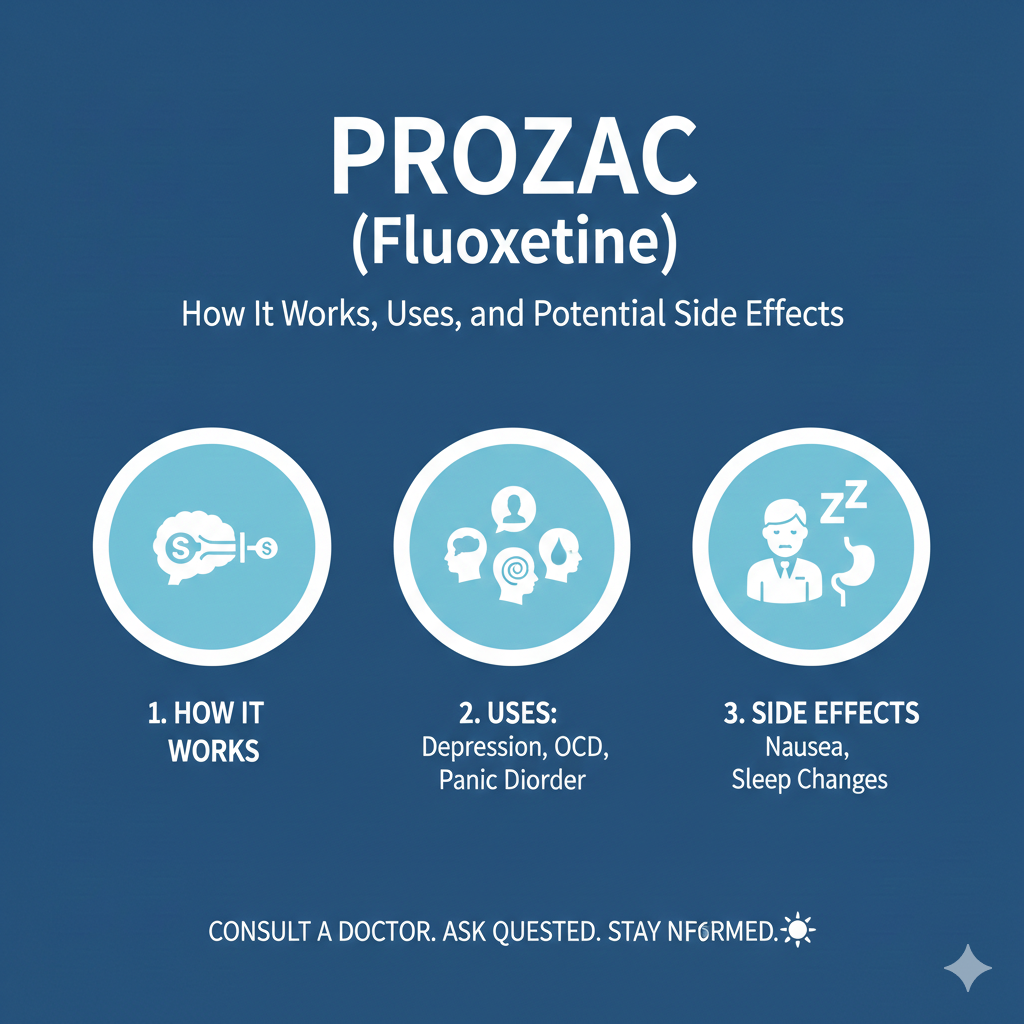
Prozac, known generically as fluoxetine, is one of the most widely prescribed antidepressant medications in the world. It belongs to a class of drugs called selective serotonin reuptake inhibitors (SSRIs) and is commonly used to treat depression and several other mental health conditions. Understanding how it works and when it is prescribed is an important part of evidence-based mental health care strategies, ensuring patients receive safe and effective treatment.
In this article, we will explore how Prozac works in the body, its primary uses, and the potential side effects patients should be aware of.
How Does Prozac (Fluoxetine) Work?
Prozac works by increasing the levels of serotonin in the brain. Serotonin is a neurotransmitter that plays a key role in regulating mood, sleep, appetite, and emotional balance.
Fluoxetine blocks the reabsorption (reuptake) of serotonin in the brain, allowing more of it to remain available between nerve cells. This improved serotonin signaling can help stabilize mood and reduce symptoms of depression and anxiety over time.
What Conditions Is Prozac Used For?
Prozac is approved to treat several mental health and behavioral conditions, including:
• Major depressive disorder
• Obsessive-compulsive disorder (OCD)
• Panic disorder
• Bulimia nervosa
• Premenstrual dysphoric disorder (PMDD)
In some cases, healthcare providers may also prescribe it off-label for other anxiety-related conditions under close supervision.
Common Side Effects of Prozac
Like all medications, Prozac may cause side effects. Most are mild and improve as the body adjusts to the medication. Common side effects include:
• Nausea or upset stomach
• Headache
• Insomnia or sleep disturbances
• Fatigue
• Increased sweating
Some individuals may experience changes in appetite or weight, sexual side effects, or nervousness.
Serious Risks and Precautions
Although rare, Prozac can increase the risk of suicidal thoughts, particularly in young adults and adolescents during the early stages of treatment. Patients should be closely monitored when starting or adjusting dosage.
Other rare but serious risks include serotonin syndrome, allergic reactions, and interactions with other medications. It is essential to consult a qualified healthcare professional before starting or stopping fluoxetine.
When to Seek Medical Advice
Patients should contact a healthcare provider immediately if they experience worsening depression, mood changes, agitation, severe dizziness, or signs of an allergic reaction such as swelling or difficulty breathing.
Medication management should always be guided by a licensed medical professional to ensure safety and effectiveness.
Conclusion
Prozac (fluoxetine) remains one of the most effective and widely used antidepressants when prescribed appropriately. By understanding how it works, recognizing potential side effects, and maintaining regular medical follow-ups, patients can improve treatment outcomes and overall well-being.
Healthcare organizations focused on delivering comprehensive clinical consulting services emphasize safe prescribing practices, patient education, and ongoing monitoring to support responsible medication use and improved mental health outcomes.