Male infertility contributes to nearly half of all fertility problems worldwide, but in India it remains the most under-investigated part of a couple’s workup. In my clinical practice at Diwya Vatsalya Mamta Fertility Centre, I regularly meet couples who have already spent two or three years pursuing treatment for the woman — hormone therapy, ovulation induction, several IUI cycles — before anyone thought to properly evaluate the husband. When we finally do the workup, the answer often changes the entire treatment direction.
The purpose of this article is to walk through how a properly designed male fertility evaluation actually looks, the three complex case types we frequently manage in Bihar and eastern India, and what modern treatment can realistically offer. Male infertility is treatable in the vast majority of cases — but only when it is diagnosed correctly, not labelled “unexplained” after one basic semen report.
QUICK ANSWER
Yes — almost all cases of male infertility, including very low sperm count (severe oligozoospermia), absence of sperm in ejaculate (azoospermia), and unexplained fertilisation failures, are treatable with the right combination of medical management, surgical sperm retrieval and ICSI-based IVF. The key is a correct diagnosis first: hormonal, genetic, structural and DNA-fragmentation testing — not just a basic semen analysis. Dr. Rashmi Prasad, Director of Diwya Vatsalya Mamta Fertility Centre, has managed complex male infertility cases across Bihar, Jharkhand, eastern Uttar Pradesh and Nepal for over 25 years.
Why Male Infertility Is Under-Diagnosed in India
Three cultural and clinical factors combine to delay male fertility diagnosis in Indian couples.
The first is social discomfort. Many men resist semen analysis because they feel it questions their masculinity. Testing gets postponed for months or years. In smaller towns of Bihar and Jharkhand, this delay is even longer.
The second is over-reliance on a single semen report. One abnormal result is not enough for a diagnosis, and one normal result does not rule out a problem. Sperm parameters vary significantly between samples, especially when factors like fever, medication, or hot weather intervene.
The third is an incomplete workup. A basic semen analysis alone misses hormonal issues, sperm DNA fragmentation, genetic problems and obstructive causes. When only counting and motility are checked, a whole category of male infertility remains hidden.
The result is that many couples spend years and often lakhs of rupees on treatments aimed at the woman when the primary factor lies elsewhere. In my view, a proper male fertility evaluation should always run in parallel with the female workup — from the very first visit.
What a Proper Male Fertility Workup Actually Includes
When a couple visits us for a fertility consultation, the male partner’s evaluation covers, at minimum, the following.
- Two semen analyses, with 2 to 4 weeks between samples, after 2 to 5 days of abstinence, in a standardised lab
- Sperm morphology using Kruger strict criteria — the shape of sperm matters as much as count and motility
- Hormonal panel — FSH, LH, testosterone, prolactin, thyroid — required in low count or low motility cases
- Scrotal ultrasound — to check for varicocele, obstruction, or testicular abnormality
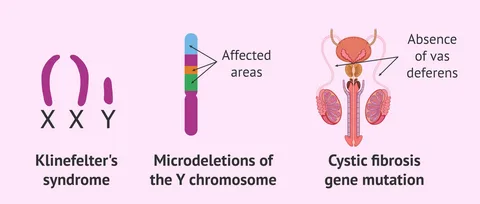
- Genetic testing — karyotyping and Y-chromosome microdeletion analysis in cases of severe oligozoospermia or azoospermia
- Sperm DNA fragmentation test — when semen looks normal but pregnancy fails, or IVF cycles fail repeatedly
- Post-ejaculate urine test — to rule out retrograde ejaculation when semen volume is very low
Only after this workup can we honestly say what the male-factor picture is. Anything less is guesswork.
Three Complex Male Infertility Case Types We Regularly Manage
The following are not stories of individual patients. They are common clinical archetypes we see repeatedly in the Bihar and eastern India male-fertility population. Each requires a distinctly different approach, and each is treatable when identified correctly.
Case Archetype 1 — Severe Oligoasthenozoospermia (very low count and low motility)
Typical presentation. A man in his early thirties, generally healthy, no obvious symptoms. Semen count between 1 and 4 million per ml (normal is above 15 million), progressive motility below 20%, morphology often below 2%. The couple has been trying naturally for three years or more.
What we look for. Hormonal cause (low FSH, low testosterone), varicocele on ultrasound, lifestyle factors (heat exposure, smoking, obesity, anabolic steroid use), genetic factors, chronic illness.
Approach. If a varicocele is detected, surgical correction can improve parameters over three to six months. Hormonal deficiencies respond to targeted therapy. Lifestyle correction — weight, heat, smoking — supports every other intervention. If parameters do not recover to natural-conception levels within six months, we move directly to ICSI with the recovered sperm, bypassing the need for the millions of sperm that natural conception requires.
Case Archetype 2 — Non-Obstructive Azoospermia (zero sperm in ejaculate)
Typical presentation. A man told by another clinic that “there is no hope because no sperm was found.” He has often been advised to consider donor sperm without any surgical evaluation offered.
What we look for. First, we confirm azoospermia with a repeat sample and centrifugation. Then a hormonal panel — elevated FSH suggests testicular failure; normal FSH suggests obstruction. Genetic testing to rule out Y-chromosome microdeletion or Klinefelter syndrome. Scrotal ultrasound for structural clues.
Approach. This is where surgical sperm retrieval becomes life-changing. TESA (Testicular Sperm Aspiration), PESA (Percutaneous Epididymal Sperm Aspiration) or micro-TESE (microsurgical testicular sperm extraction) can retrieve sperm directly from the testes in the majority of non-obstructive cases. Even a few dozen live sperm are enough for ICSI. Many couples who were told to accept donor sperm elsewhere end up conceiving with their own genetic material once this pathway is properly explored.
Case Archetype 3 — Normal Semen Report but Recurrent IVF Failure or Miscarriage
Typical presentation. Semen report is entirely normal — good count, good motility, normal morphology. Female workup is clean. And yet two or three IVF cycles have failed to achieve pregnancy, or early miscarriages keep recurring. Both partners are told it is “unexplained.”
What we look for. Sperm DNA Fragmentation Index (DFI). This test is not routinely done in India but is critical in this scenario. A high DFI, above 30%, means the sperm looks normal externally but carries damaged DNA — enough to fertilise the egg but not enough to sustain a healthy embryo. We also re-examine occult varicocele, oxidative stress, and lifestyle contributors.
Approach. A three-month course of antioxidant therapy (vitamin C, vitamin E, coenzyme Q10, l-carnitine, zinc) significantly reduces DNA fragmentation in most patients. If a varicocele is present, correction adds further benefit. For the next IVF cycle, we often use PICSI or magnetic-activated cell sorting (MACS) to select DNA-intact sperm. This one change frequently converts a “recurrent failure” case into a successful pregnancy.
The Treatment Decision Framework
Our clinical decision-making across these case types follows a consistent framework.
- Diagnose fully before treating anything. A wrong diagnosis leads to wasted years.
- Correct the correctable — varicocele surgery, hormonal correction, lifestyle change, antioxidant therapy. Give these three to six months where age allows.
- Match the technology to the case — ICSI for low count or motility, TESA/TESE for azoospermia, PICSI/MACS for DNA fragmentation, PGT-A for recurrent implantation failure.
- Involve the couple in every decision. Never proceed with donor sperm until every surgical retrieval option has been discussed, and never proceed with expensive add-ons unless the evidence supports them for that specific case.
When to Escalate: A Practical Guide
For couples reading this and trying to understand where they stand, a few practical signals help.
The Emotional and Cultural Dimension
In India, male infertility carries a social burden that female infertility has slowly become more open to discussing. Men often internalise the diagnosis silently, avoid follow-up visits, or push back on treatment recommendations. Part of any good fertility team’s work is to create a space where the male partner is treated as an equal participant in the diagnosis and treatment — not an afterthought.
We routinely conduct consultations in Hindi and Bhojpuri, with clear language, no jargon, and no blame. The most successful male-infertility outcomes I have seen come from couples who understood the science together, made decisions together, and stayed committed to the treatment plan together.
Bihar and Eastern India: Access to Advanced Male Fertility Care
For patients travelling to Patna from Bihar, Jharkhand, eastern Uttar Pradesh and Nepal, one practical concern is whether advanced male infertility care — surgical sperm retrieval, DNA fragmentation testing, PICSI, MACS — is actually available locally without travelling to Delhi or Mumbai. It is. Our centre offers the complete male-factor pathway in-house, which matters because retrieved sperm needs to be handled without transport delay or freezing loss.
For a broader look at how our team approaches male infertility comprehensively, see our detailed guide on male infertility treatment in Patna.
ABOUT THE AUTHOR
Dr. Rashmi Prasad is the Director of Diwya Vatsalya Mamta Fertility Centre in Patna, Bihar. She has more than 25 years of experience in gynaecology, infertility and assisted reproductive technology. She holds MBBS, DGO and DNB qualifications and completed her PG-ART (Assisted Reproductive Technology) training from the University of Kiel, Germany. Her clinical practice covers the full spectrum of male and female infertility — from ovulation disorders and endometriosis to severe male-factor cases requiring surgical sperm retrieval and ICSI. Diwya Vatsalya Mamta Fertility Centre has been serving patients since 2010 with in-house embryology, transparent pricing, and continuity of the same treating doctor across every visit.
Frequently Asked Questions
Q1. Is male infertility permanent?
In most cases, no. Even severe conditions like azoospermia are often treatable — through medical correction, surgical sperm retrieval, or ICSI-based IVF. Truly untreatable cases are rare when a complete modern workup is done.
Q2. My semen report is normal but we are not conceiving. Is that possible?
Yes. A standard semen analysis measures only count, motility and basic morphology. It does not measure sperm DNA fragmentation, which can look normal on paper but still cause fertilisation failure or miscarriage. Ask for a DNA Fragmentation Index (DFI) test if you have had unexplained IVF failure or recurrent miscarriage.
Q3. Can azoospermia be cured?
It depends on the type. Obstructive azoospermia (sperm production is normal but blocked) is often surgically correctable. Non-obstructive azoospermia (production itself is low) may still allow sperm retrieval via TESA, PESA or micro-TESE — enough for ICSI. Donor sperm should be a last resort after all retrieval options have been explored.
Q4. Should I do surgery for varicocele before IVF?
If a clinically significant varicocele is detected and male age allows a three-to-six-month recovery window, surgical correction often improves sperm parameters and IVF outcomes. If the male partner is older or time is short, we may proceed directly to ICSI. This decision is always case-specific.
Q5. Does age affect male fertility?
Yes, though the decline is more gradual than in women. Sperm DNA quality decreases progressively after age 40, contributing to lower pregnancy rates and higher miscarriage risk. Age alone is rarely a barrier, but combined with other factors it changes the treatment urgency.
Q6. What lifestyle changes actually improve sperm quality?
Weight reduction if overweight, quitting smoking and tobacco, limiting alcohol, avoiding excessive heat exposure (long hot baths, tight underwear, laptops on the lap), stress management, and seven to eight hours of sleep. Give lifestyle changes at least three months — a full sperm cycle — before re-testing.
Conclusion
Complex male infertility is one of the most rewarding areas of fertility medicine, precisely because so many patients are told the problem is worse than it really is. In the vast majority of cases — including severe low count, azoospermia and unexplained IVF failure — modern reproductive medicine now offers a genuinely effective pathway. What matters is that the diagnosis is done properly, the treatment matches the case, and the couple is given the full range of options before any irreversible decision is taken. Male infertility, treated correctly, is one of the most solvable problems we handle in fertility practice today.