Egg freezing is a fertility preservation method that allows female eggs to be collected and stored for possible use in the future. It may be considered by people who want to delay pregnancy or who are facing medical treatments that could affect fertility.
The process involves stimulating the ovaries, retrieving mature eggs, freezing them using specialized laboratory techniques, and storing them until they are needed. While egg freezing can preserve reproductive options, it does not guarantee a future pregnancy.
What Is Egg Freezing?
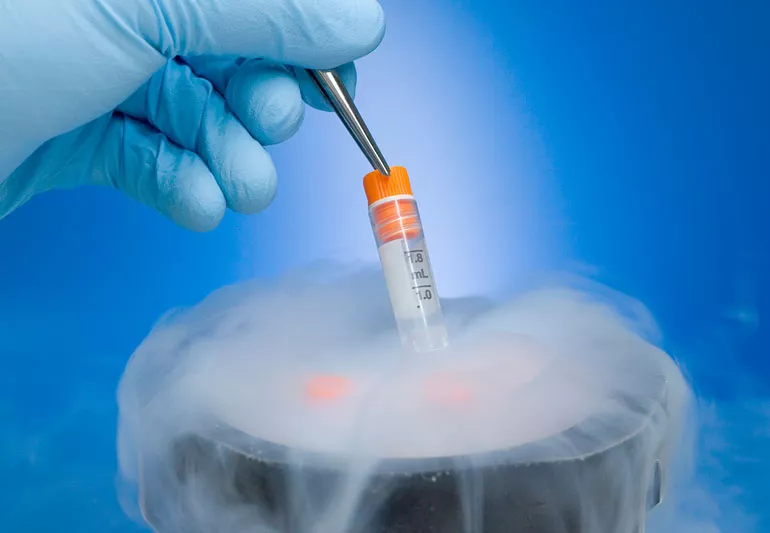
Egg freezing, medically known as oocyte cryopreservation, involves collecting unfertilized eggs from the ovaries and preserving them at very low temperatures. The eggs can later be thawed, fertilized with sperm in a laboratory, and used to create embryos through in vitro fertilization (IVF).
Modern fertility laboratories commonly use vitrification, a rapid-freezing technique designed to minimize ice crystal formation and protect the egg during freezing and thawing.
Does Egg Freezing Stop the Biological Clock?
Egg freezing does not stop natural reproductive ageing. Instead, it preserves eggs at approximately the biological age at which they were retrieved. This matters because egg quality generally declines as age increases, particularly during the later reproductive years.
The age at which eggs are frozen is therefore an important factor influencing their potential for future use.
Who Should Consider Egg Freezing?
There is no single reason for choosing fertility preservation. Some people consider it because of medical circumstances, while others want to preserve reproductive options because they are not currently ready to become pregnant.
People Delaying Pregnancy
Some individuals may wish to have children in the future but are not currently ready because of personal, educational, career, relationship, or other circumstances.
Because fertility generally decreases with age, discussing egg freezing earlier may provide more realistic information about ovarian reserve, expected egg yield, and potential future outcomes.
In Malad, individuals who are considering delaying pregnancy may discuss egg freezing treatment in Malad with a fertility specialist to understand their ovarian reserve, age-related fertility considerations, expected number of treatment cycles, potential risks, and likelihood of using the stored eggs successfully in the future.
Before Medical Treatments That May Affect Fertility
Certain cancer treatments, particularly some forms of chemotherapy and radiation therapy, can affect ovarian function and future fertility. Fertility preservation may therefore be discussed before treatment begins when medically appropriate.
People undergoing some ovarian surgeries or treatments for conditions that may affect ovarian reserve may also be advised to discuss fertility preservation. Coordination between the fertility specialist and treating medical team is important when treatment is time-sensitive.
How Does the Egg Freezing Process Work?
Egg freezing usually involves several stages over approximately two weeks once ovarian stimulation begins. However, the complete timeline can vary depending on initial investigations, menstrual timing, ovarian response, and individual treatment requirements.
Step 1: Fertility Assessment
Before treatment, a fertility specialist reviews medical history, menstrual patterns, medications, reproductive goals, and previous fertility concerns. Blood tests and ultrasound may be performed to assess ovarian reserve and estimate how the ovaries may respond to stimulation.
Ovarian reserve tests can help guide treatment planning, but they cannot precisely predict whether someone will become pregnant naturally or with frozen eggs in the future.
Step 2: Ovarian Stimulation
Hormonal medications are usually taken for approximately 8-14 days to encourage several ovarian follicles to develop simultaneously. This differs from a natural menstrual cycle, in which usually one egg reaches maturity.
During stimulation, ultrasound examinations and sometimes blood tests are performed. Medication doses may be adjusted according to follicle growth and hormone levels.
Step 3: Trigger Injection and Egg Retrieval
When the follicles reach an appropriate stage, a trigger medication is administered to support final egg maturation. Egg retrieval is generally scheduled about 34-36 hours later.
During retrieval, an ultrasound-guided needle is passed through the vaginal wall to collect fluid from the ovarian follicles. Sedation or anaesthesia is commonly used to minimize discomfort.
Step 4: Freezing and Storage
After retrieval, the laboratory identifies mature eggs suitable for freezing. These eggs are generally preserved through vitrification and stored under carefully controlled conditions.
When the person later wants to attempt pregnancy, eggs can be thawed and fertilized. Because freezing and thawing can affect eggs, not every stored egg will necessarily survive or result in a viable embryo.
What Is the Best Age to Freeze Eggs?
There is no universal “best age” for everyone. In general, freezing eggs at a younger reproductive age is associated with better egg quality and potentially better future reproductive outcomes.
However, age is not the only consideration. Ovarian reserve, medical history, reproductive plans, financial considerations, and the likelihood of actually using stored eggs should also be discussed.
Waiting until fertility has already declined significantly may reduce the number and quality of eggs available for freezing.
How Many Eggs Should Be Frozen?
There is no fixed number of eggs that guarantees a future baby. The number needed varies according to age at freezing, egg quality, ovarian response, laboratory outcomes, and future reproductive circumstances.
Some people may obtain an appropriate number of mature eggs during one stimulation cycle, while others may consider multiple cycles. A fertility specialist can provide an individualized estimate based on age and ovarian reserve.
What Are the Risks and Limitations?
Egg freezing is generally considered an established fertility preservation technique, but it involves medications and an invasive egg retrieval procedure.
Potential considerations include:
- Temporary bloating and pelvic discomfort
- Medication-related side effects
- Bleeding or infection after retrieval, though uncommon
- Ovarian hyperstimulation syndrome in some patients
- Emotional and financial considerations
- No guarantee of future pregnancy
Importantly, successful egg retrieval and freezing do not guarantee that every egg will survive thawing, fertilize, develop into an embryo, implant, or result in a live birth.
What Happens When Frozen Eggs Are Used?
When pregnancy is desired, selected eggs are thawed in the fertility laboratory. Surviving mature eggs are usually fertilized using intracytoplasmic sperm injection (ICSI), where a single sperm is injected directly into an egg.
Successfully fertilized eggs are monitored as they develop into embryos. A suitable embryo may then be transferred into the uterus. Additional viable embryos may sometimes be frozen for future use.
Conclusion
Egg freezing allows individuals to preserve unfertilized eggs for possible future use. It may be considered by people delaying pregnancy or those facing medical treatments or conditions that could affect future fertility.
Age at freezing, ovarian reserve, number of mature eggs collected, laboratory processes, and future reproductive health can all influence outcomes. A fertility assessment can help individuals understand the potential benefits, limitations, risks, and realistic expectations before deciding whether to proceed.
Frequently Asked Questions
1. Does freezing eggs guarantee a future pregnancy?
No. Egg freezing preserves reproductive options but cannot guarantee pregnancy. Outcomes depend on age when eggs were frozen, the number and quality of stored eggs, survival after thawing, fertilization, embryo development, implantation, and other reproductive factors.
2. How long does the egg freezing process take?
Ovarian stimulation usually takes approximately 8-14 days, followed by egg retrieval. The complete process may take longer when initial fertility testing, treatment planning, menstrual timing, or additional medical evaluation is required before stimulation begins.
3. Is egg retrieval painful?
Egg retrieval is usually performed with sedation or anaesthesia to minimize discomfort. Mild pelvic pain, cramping, bloating, or spotting may occur afterward. Severe pain, heavy bleeding, breathing difficulty, or significant swelling requires medical attention.
4. How long can frozen eggs be stored?
Properly cryopreserved eggs can potentially remain stored for many years. Storage duration may also be influenced by local regulations and clinic policies. Patients should discuss storage arrangements, fees, consent requirements, and future use with their fertility clinic.
5. Can frozen eggs be used for natural conception?
No. Frozen eggs must be thawed and fertilized in a laboratory before pregnancy can be attempted. The resulting embryo is then transferred into the uterus as part of an IVF treatment cycle.